
Blue Collar Buzz
Fresh photos and updates on Canadian cannabis politics and culture

Inside Cannabis Culture
Cannabis culture in Canada is often framed as a modern, regulated industry born out of recent legalization, but that narrative overlooks a deeper and more complex reality. While cannabis itself has not traditionally held the same ceremonial or sacred role in Indigenous cultures as tobacco, Indigenous communities have nonetheless played a critical role in sustaining cannabis use, trade, and knowledge through decades of prohibition. During a time when the Canadian state criminalized cannabis and heavily policed its distribution, many Indigenous entrepreneurs and communities created parallel economies that kept the plant accessible. In this sense, the roots of today’s legal market are not solely the result of government policy shifts, but also the persistence and resilience of Indigenous-led networks that operated outside colonial frameworks.
Indigenous dispensaries today are an extension of that legacy, representing not only economic opportunity but also sovereignty in action. These businesses often operate according to Indigenous laws, governance structures, and trade agreements that predate and exist independently of Canadian federal and provincial systems. For many communities, cannabis is part of a broader assertion of the right to self-determine economic activity on their own land. Supporting Indigenous dispensaries, then, is not just a consumer choice—it’s a recognition of jurisdiction, respect for Indigenous trade relationships, and acknowledgment of the role these communities played in shaping the current landscape of cannabis in Canada.
When government enforcement actions target Indigenous dispensaries or attempt to impose external regulatory frameworks that dictate who can sell cannabis and where it can be purchased, it raises serious concerns. Such actions can undermine Indigenous sovereignty and disregard longstanding trade agreements between Indigenous nations. Framing these interventions as neutral law enforcement ignores the broader context: a colonial system asserting control over Indigenous economies while benefiting from an industry that Indigenous peoples helped sustain. In that light, these policies are not just regulatory disagreements—they can be understood as perpetuating systemic discrimination, and, as many argue, a form of ongoing racism embedded within the structure of the legalized cannabis market.


150+
15
Trusted Voices
Real Stories
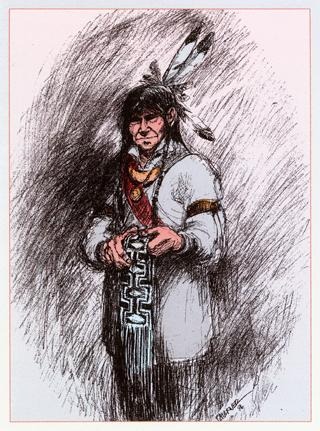
A wampum belt is a ceremonial record made by Indigenous nations of the Eastern Woodlands, especially the Haudenosaunee, using shell beads to represent agreements and relationships. The Two Row Wampum Belt symbolizes parallel coexistence and mutual respect. Today, it highlights that Indigenous trade rights were never ceded, underscoring the need to honor treaties by supporting free, self-determined Indigenous trade and respecting nation-to-nation agreements.